What Happened to the French Crown Jewels Stolen From the Louvre Last Year?

Here is a full timeline of the heist, the suspects' confessions, and the wave of copycat museum thefts that followed across Europe.
"Hearst Magazines and AOL may earn commission or revenue on some items through these links."
One year ago today, a group of thieves pulled off one of the most audacious museum heists in modern history, making off with the majority of the surviving French crown jewels from the most visited museum in the world. Twelve months later, almost all of them are still missing. Here is a full account of what happened, what has been learned, and where things stand now.
What happened during the heist?
The robbery took place on the morning of October 19, 2025, roughly an hour after the Louvre opened to the public. Four suspects arrived at the museum in a truck fitted with a cherry picker-type crane, raised themselves to the balcony of the Apollo Gallery on the second floor, and broke through a reinforced window using angle grinders.
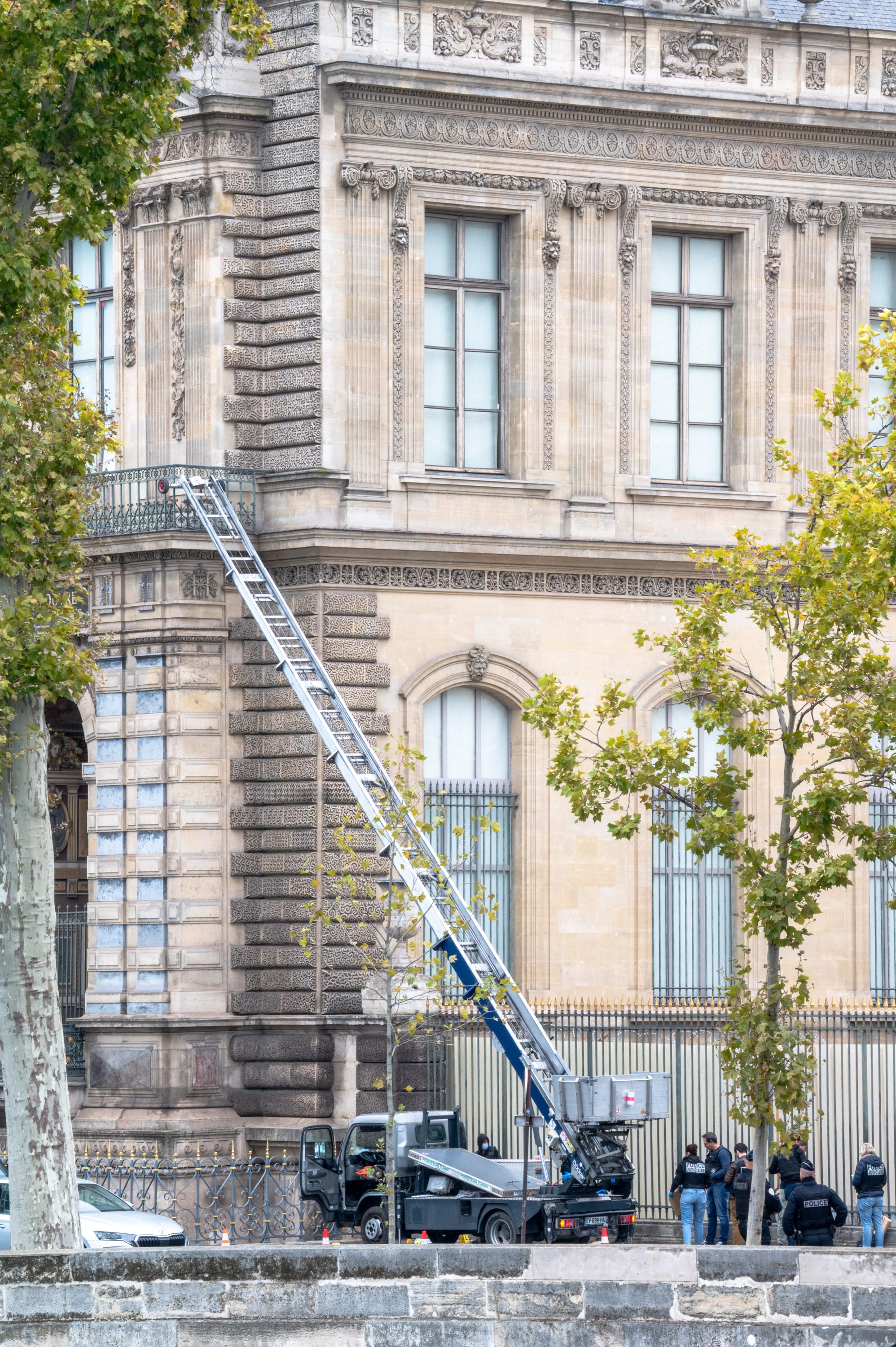
Investigators examine the crane the thieves used to access the Louvre in October 2025.LAURENT CARON - Getty Images
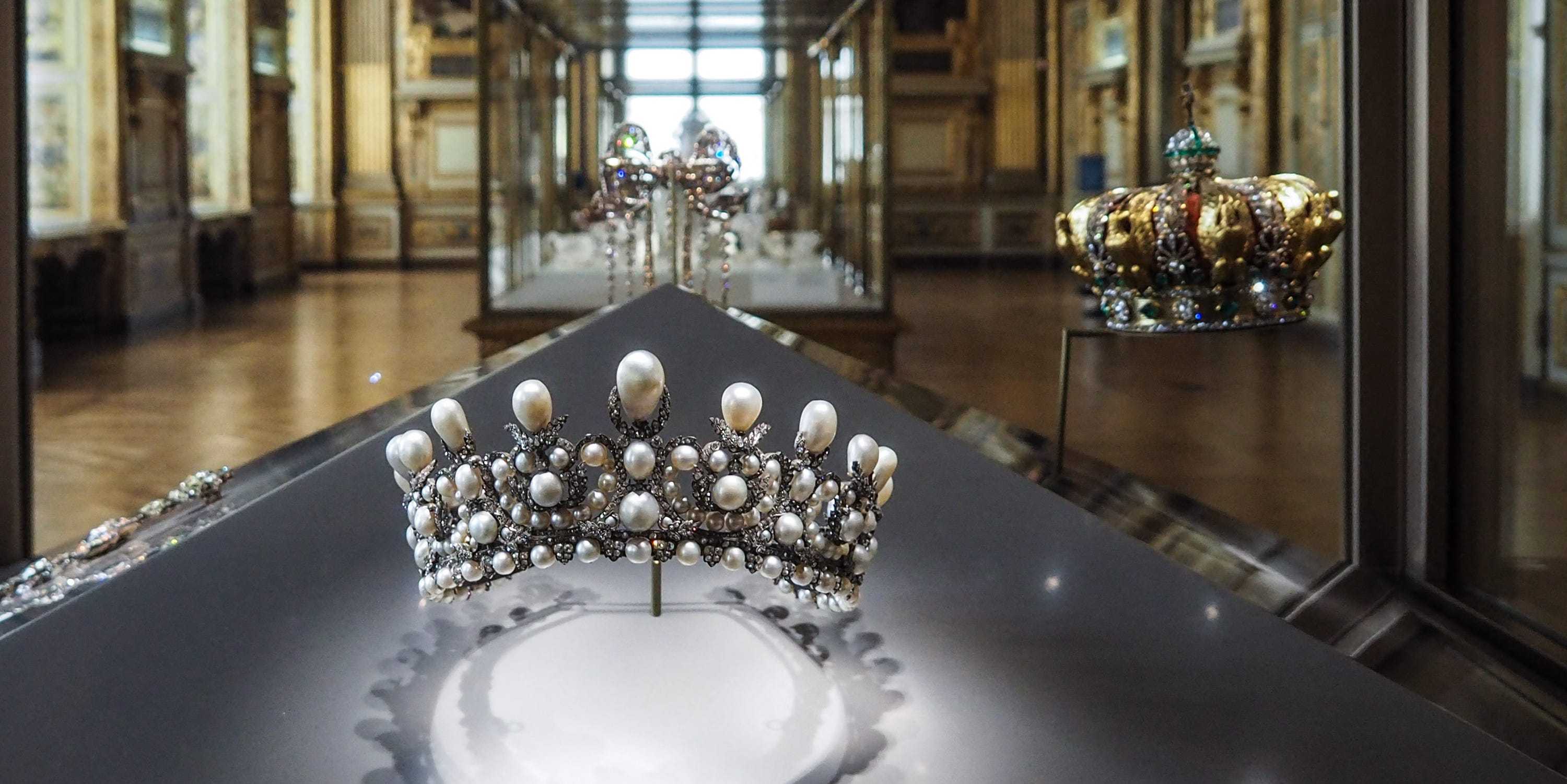
As security footage shared with the public months later revealed, they cut into two display cases and removed eight pieces of jewelry, including tiaras, a brooch, necklaces, and earrings that had belonged to French queens and empresses. One of these pieces was a tiara containing 1,998 diamonds that had belonged to Empress Eugénie, the consort of Napoleon III. The total value was estimated by French officials at €88 million ($102 million).
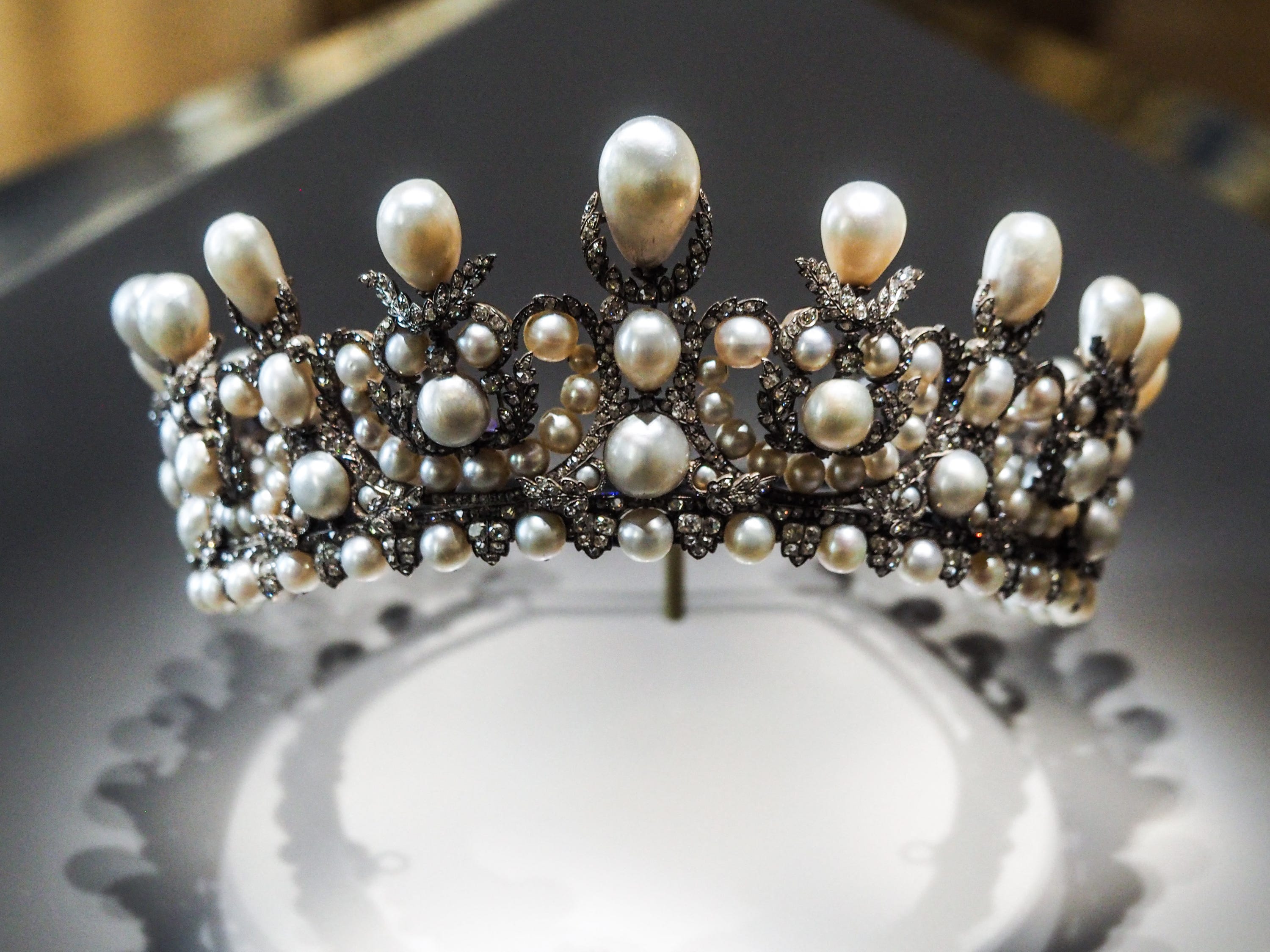
Empress Eugénie’s pearl and diamond tiara, pictured in May 2021, which has still not been recovered.MAEVA DESTOMBES - Getty Images
In a wild escape, the thieves fled on scooters, but failed at setting fire to the crane, mounted on a truck, before leaving. During the escape, Empress Eugénie’s crown (not to be confused with the tiara) was dropped near the museum and recovered the same day. The remaining pieces have not been found.
What has happened since then?
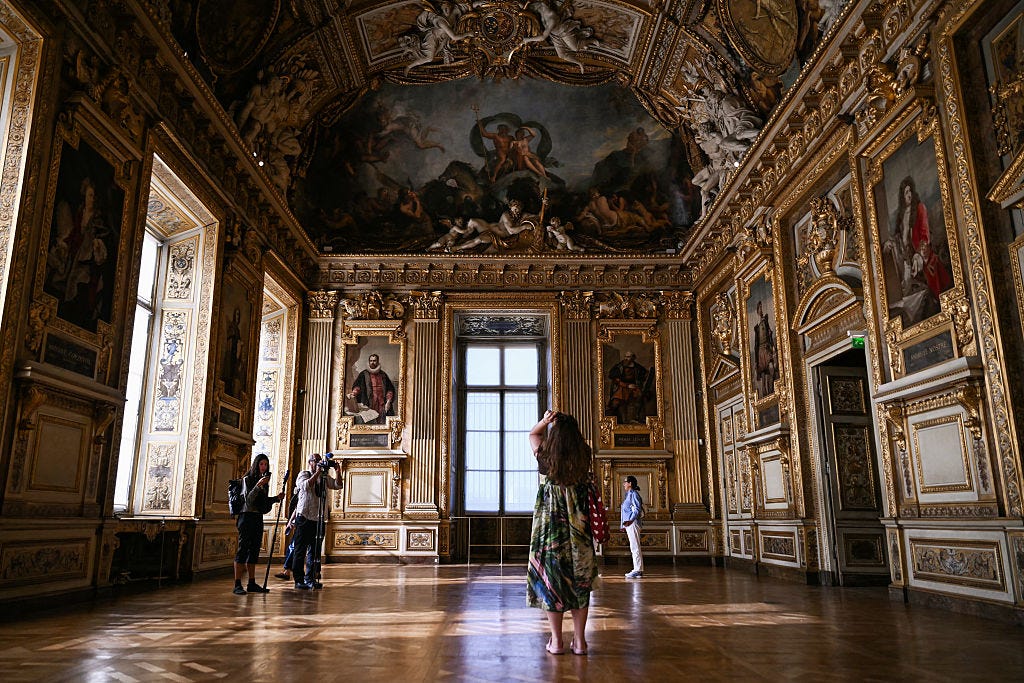
The Apollo Gallery, now empty, after reopening in July.LOU BENOIST - Getty Images
Two suspects were arrested within a week of the robbery, one of them apprehended at Charles de Gaulle Airport attempting to board a flight to Algeria. A second wave of arrests followed on October 29, when five more people were detained in the Paris region, including one suspect linked by DNA evidence found on a helmet at the crime scene. By late November, four additional suspects had been arrested, bringing the total number detained in connection with the investigation to eleven.
The Louvre’s director, Laurence des Cars, resigned in February 2026 amid questions about systemic security failures, including a scathing government audit that found only 39% of the museum’s rooms were equipped with at least one security camera. The Apollo Gallery was closed to the public for nine months before reopening in July 2026, its display cases empty. The gallery’s surviving contents have been relocated to a quieter wing of the museum.
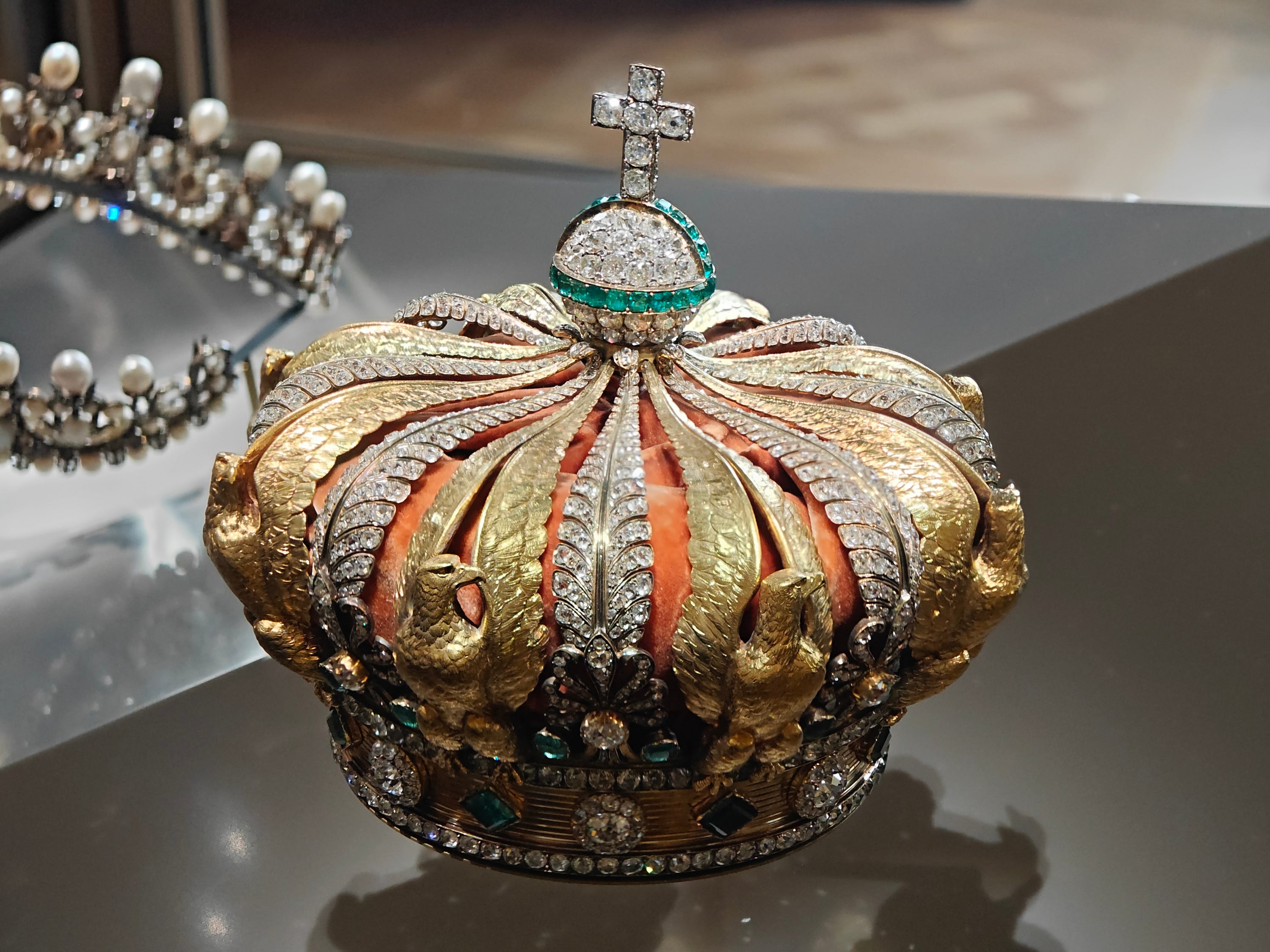
Empress Eugénie’s crown, still fully in tact, in May 2025.VCG - Getty Images
The Louvre’s new director, Christophe Leribault, described toLe Monde told that he plans to make Empress Eugénie’s crown, which was damaged as the robbers escaped, the centerpiece of a new permanent display in a less congested part of the museum once it has been fully restored.
What have the suspects revealed?
Two of the four suspects broke their silence in June 2026, providing the first detailed account of the robbery in statements published by Le Monde. Abdoulaye N., a 40-year-old former internet personality known for motorcycle stunt videos, admitted he knew the target was the Louvre. His co-defendant, Ghelamallah A., 36, claimed he was told it was a jewelry store. Both said they were recruited two or three days before the heist by an unnamed client, referred to only as “Jo,” who they say was present at the museum that morning and directed the operation. Each was promised between €15,000 and €25,000 ($17,000 to $29,000).
After removing the jewelry, Abdoulaye N. said he transported the haul to an underground parking garage in a suburb outside of Paris, where he handed it to the alleged mastermind. “The person who ordered the theft wasn't happy,” Abdoulaye told investigators. “He thought we could have taken more.” Both men refused to name the mastermind. “I can’t say his name, there will be repercussions, I don’t want my family to be targeted,” Abdoulaye N. said.
Where are the remaining French crown jewels now?
Investigators are working with two competing theories. One theory holds that no outside mastermind exists, and the jewels remain somewhere in the Paris region, known only to the four suspects in custody.
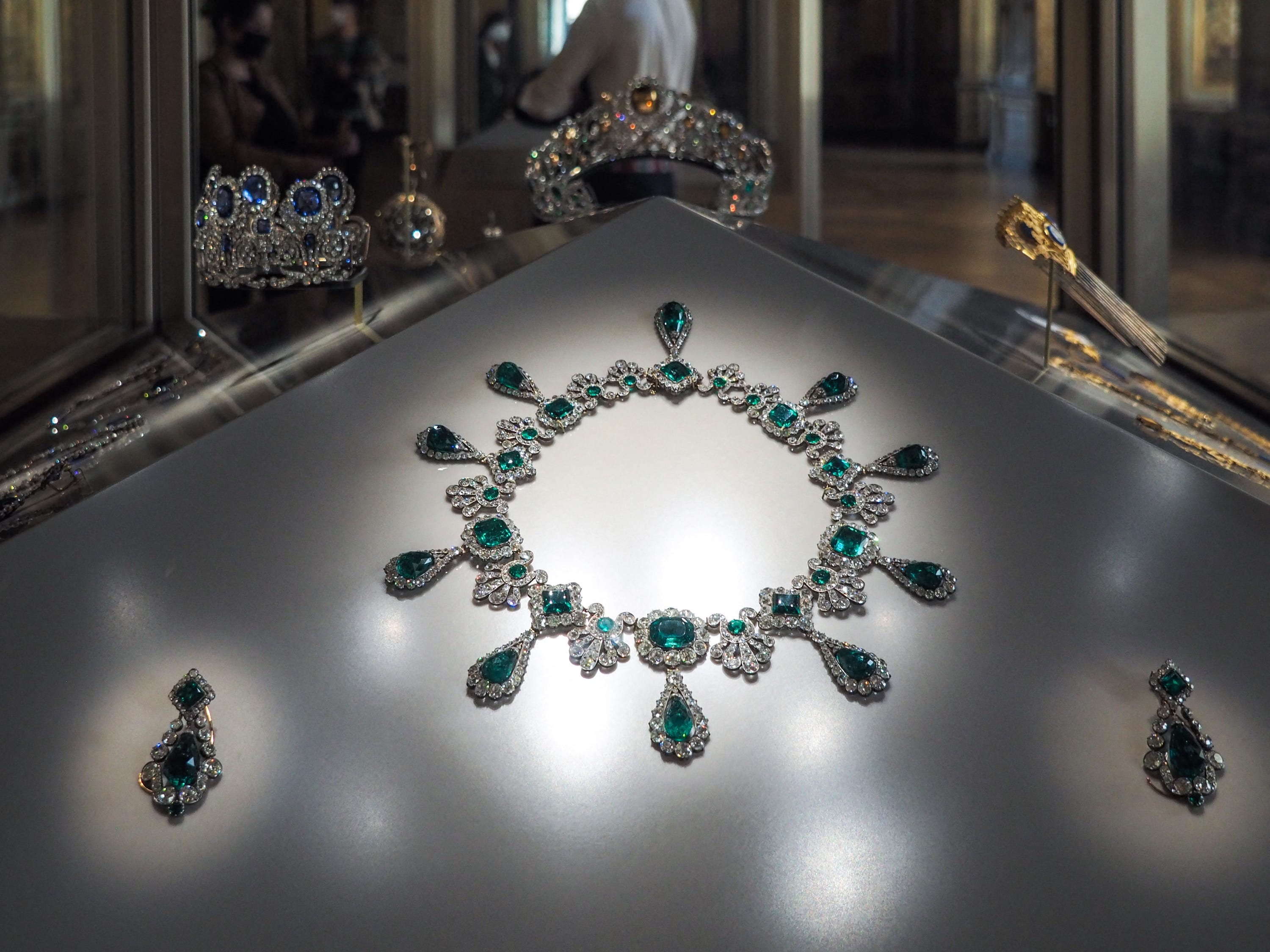
An emerald necklace and pair of earrings that belonged to Empress Marie Louise, the second consort of Napoleon I.MAEVA DESTOMBES - Getty Images
But in the second theory, which would be the worst case scenario, the jewels were passed to intermediaries on the day of the robbery and have since been moved abroad for resale. This would likely mean the jewels have already been dismantled, with individual stones recut and sold separately, making them virtually untraceable. Unlike cash, which carries serial numbers that can be tracked, or paintings—which are catalogued, photographed, and nearly impossible to sell openly once stolen—individual gemstones can be recut to alter their shape and size, stripping them of any identifying characteristics and making them indistinguishable from legitimately sourced stones on the open market.
How are museums changing?
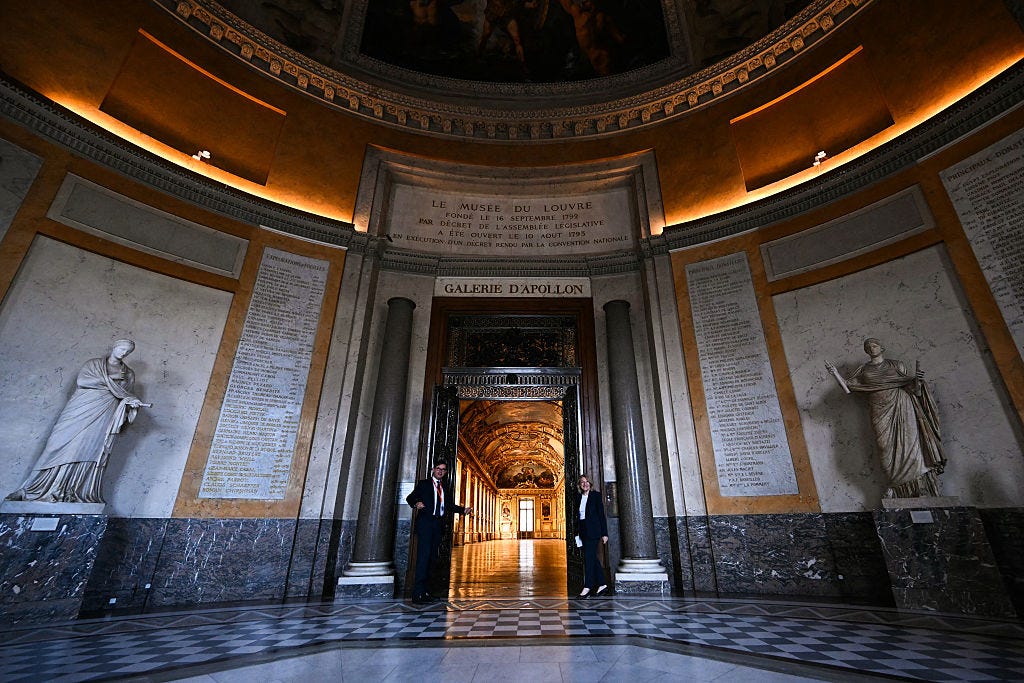
Louvre President Christophe Leribault and French Culture Minister Catherine Pegard outside of the Apollo Gallery in July.LOU BENOIST - Getty Images
The heist has arguably set off a wave of copycat thefts across Europe. Since the Louvre heist, a Picasso disappeared en route to a museum in southern Spain, thieves pulled a smash-and-grab on a $5 million Van Cleef & Arpels diamond necklace from a museum in Vienna, Bronze Age gold artifacts were taken from a museum in southeastern Spain, four Renaissance paintings were stolen from a museum in Sicily, the Lalique Museum in northern France was robbed of $4.5 million in jewelry, and a pair of masterpieces were nicked from the Renoir Museum last month. That’s just naming a few.
Europol warned in August that museum heists were employing increasingly aggressive methods, potentially indicating the involvement of new criminal networks. The French government has so far responded with a 33-point national security plan covering vulnerable sites, specialized police recruitment, and additional protection for high-risk objects.
At the Louvre itself, the new director, Christophe Leribault, appointed in February 2026, has begun an €80 million ($90 million) security overhaul and hired a senior police officer to oversee museum-wide security. “Museums once assumed that the most famous works of our heritage were essentially unsellable and untouchable,” Leribault told the Financial Times this month. “Now, we know we must be extremely vigilant.”
You Might Also Like
25 Watch Brands That Belong in Every Collection
The 50 Best Animated Films to Watch With Your Kids
The 28 Best Westerns of All Time
Source: Crime



0 Comments