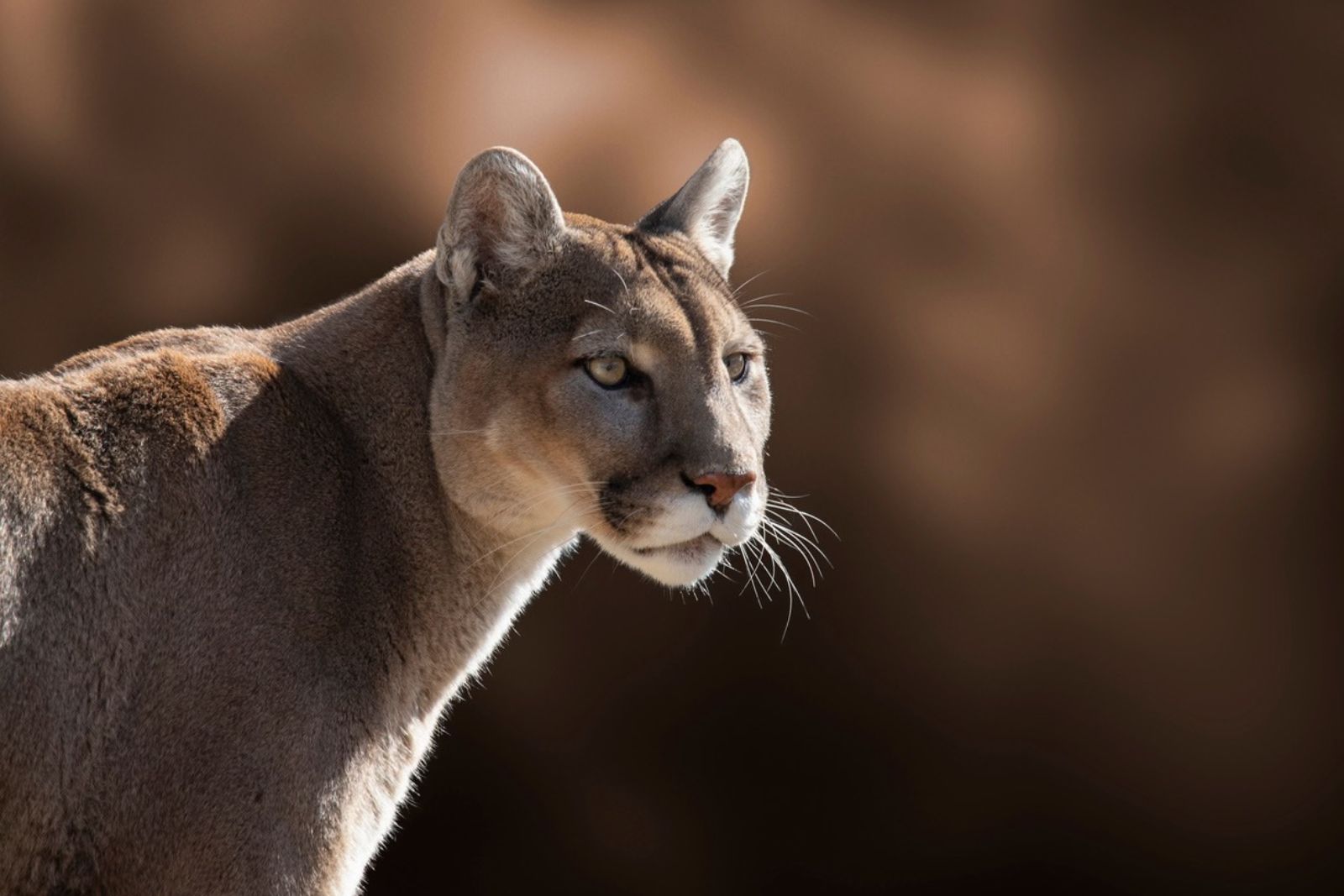
A Mountain Lion Was Confirmed In Southern Illinois, A State That Lost Them Before 1870

A Mountain Lion Was Confirmed In Southern Illinois, A State That Lost Them Before 1870© (©)A landowner near the Big Muddy River spotted something Illinois wildlife officials had confirmed only a handful of times in the past two decades, a big cat the state hasn't had a permanent population of since before the Civil War ended.
In August, a landowner near the Big Muddy River in southern Illinois reported a mountain lion sighting to state wildlife officials. On Aug. 25, Illinois Department of Natural Resources staff investigated, reviewed trail camera photos and checked the site, and confirmed it: a mountain lion was moving through Union and Jackson counties, not far from Shawnee National Forest, as Hoodline reported. Days later, the same animal turned up again on camera, heading north toward Murphysboro, about 11.5 miles from where it was first spotted.
It is only the 12th confirmed mountain lion in Illinois since 2002, in a state where the species was wiped out before 1870.
How Rare an Illinois Mountain Lion Really Is
According to the IDNR, mountain lions once ranged across Illinois but disappeared from the state before 1870 because of habitat loss and unregulated hunting. Today the agency says the species is locally wiped out, what biologists call “extirpated,” meaning it no longer has a population living there permanently, according to Wildlife Illinois.
Since 2002, only a dozen sightings have been officially confirmed, and each one needed solid evidence: clear photographs, verified tracks, DNA or a carcass. The IDNR says there is still no evidence of a resident breeding population in Illinois. Every confirmed cat has been a young male passing through, not a sign the species has returned to stay.
Illinois is not alone in seeing more of these cats lately. Missouri’s Department of Conservation confirmed several new mountain lion sightings of its own earlier this year, part of a broader pattern across the Midwest as young males wander farther from established western populations.
Where These Cats Are Coming From
DNA testing on past Illinois mountain lions points west, to populations in states like Nebraska and the Dakotas. Young males commonly leave their home territory to find unclaimed ground, food and mates, and some travel remarkable distances to do it. One mountain lion wearing a GPS collar attached by Nebraska wildlife officials turned up in Springfield, Illinois, hundreds of miles from where it started.
Trail cameras have made catching these passing cats on record far easier than it used to be. Several of Illinois’ confirmed sightings, including this one, came from camera footage rather than a direct encounter.
What To Do If You See One
Mountain lions have been a protected species in Illinois since 2015, meaning they cannot be hunted or harassed unless they threaten a person or property. The IDNR’s advice if you do see one: don’t run, and don’t surprise it. Make noise so it knows you’re there, stand tall, raise your arms to look bigger, and back away slowly. If you can, get inside a building or a vehicle. If it makes contact, fight back with whatever is at hand.
The IDNR asks anyone with a likely sighting to report it with photos, video or other evidence if possible. That kind of public reporting, like the landowner’s call near the Big Muddy River, is exactly what lets biologists track these rare, passing visits to a state the species left more than 150 years ago.
Source: Nature



0 Comments